(EXCEPT AIDS)
Ed Friedlander, M.D., Pathologist
scalpel_blade@yahoo.com

No texting or chat messages, please. Ordinary e-mails are welcome.

|

|
 |
 |
 |
 |
 This site complies with the HONcode standard for trustworthy health information: This site complies with the HONcode standard for trustworthy health information: verify here. |
Cyberfriends: The help you're looking for is probably here.
This website collects no information. If you e-mail me, neither your e-mail address nor any other information will ever be passed on to any third party, unless required by law.
This page was last modified January 1, 2016.
I have no sponsors and do not host paid advertisements. All external links are provided freely to sites that I believe my visitors will find helpful.
Welcome to Ed's Pathology Notes, placed here originally for the convenience of medical students at my school. You need to check the accuracy of any information, from any source, against other credible sources. I cannot diagnose or treat over the web, I cannot comment on the health care you have already received, and these notes cannot substitute for your own doctor's care. I am good at helping people find resources and answers. If you need me, send me an E-mail at scalpel_blade@yahoo.com Your confidentiality is completely respected. No texting or chat messages, please. Ordinary e-mails are welcome.
 I am active in HealthTap,
which provides free medical guidance from your cell phone.
There is also a fee site at
www.afraidtoask.com.
I am active in HealthTap,
which provides free medical guidance from your cell phone.
There is also a fee site at
www.afraidtoask.com.
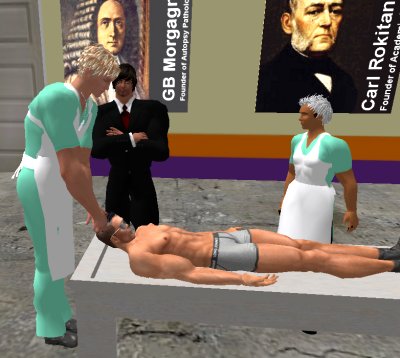
 If you have a Second Life account, please visit my teammates and me at the Medical Examiner's office. |

|
 |
With one of four large boxes of "Pathguy" replies. |
 I'm still doing my best to answer
everybody.
Sometimes I get backlogged,
sometimes my E-mail crashes, and sometimes my
literature search software crashes. If you've not heard
from me in a week, post me again. I send my most
challenging questions to the medical student pathology
interest group, minus the name, but with your E-mail
where you can receive a reply.
I'm still doing my best to answer
everybody.
Sometimes I get backlogged,
sometimes my E-mail crashes, and sometimes my
literature search software crashes. If you've not heard
from me in a week, post me again. I send my most
challenging questions to the medical student pathology
interest group, minus the name, but with your E-mail
where you can receive a reply.
Numbers in {curly braces} are from the magnificent Slice of Life videodisk. No medical student should be without access to this wonderful resource.
 I am presently adding clickable links to
images in these notes. Let me know about good online
sources in addition to these:
I am presently adding clickable links to
images in these notes. Let me know about good online
sources in addition to these:
 My team:
pathology.org -- my cyberfriends, great for current news and browsing for the general public
EnjoyPath -- a great resource for everyone, from beginning medical students to pathologists with years of experience
Medmark Pathology -- massive listing of pathology sites
Estimating the Time of Death -- computer program right on a webpage
Pathology Field Guide -- recognizing anatomic lesions, no pictures
Freely have you received, freely give. -- Matthew 10:8. My site receives an enormous amount of traffic, and I'm still handling dozens of requests for information weekly, all as a public service.
Pathology's modern founder, Rudolf Virchow M.D., left a legacy of realism and social conscience for the discipline. I am a mainstream Christian, a man of science, and a proponent of common sense and common kindness. I am an outspoken enemy of all the make-believe and bunk that interfere with peoples' health, reasonable freedom, and happiness. I talk and write straight, and without apology.
Throughout these notes, I am speaking only for myself, and not for any employer, organization, or associate.
Special thanks to my friend and colleague, Charles Wheeler M.D., pathologist and former Kansas City mayor. Thanks also to the real Patch Adams M.D., who wrote me encouragement when we were both beginning our unusual medical careers.
If you're a private individual who's enjoyed this site, and want to say, "Thank you, Ed!", then what I'd like best is a contribution to the Episcopalian home for abandoned, neglected, and abused kids in Nevada:

My home page
More of my notes
My medical students
Especially if you're looking for information on a disease with a name that you know, here are a couple of great places for you to go right now and use Medline, which will allow you to find every relevant current scientific publication. You owe it to yourself to learn to use this invaluable internet resource. Not only will you find some information immediately, but you'll have references to journal articles that you can obtain by interlibrary loan, plus the names of the world's foremost experts and their institutions.
Alternative (complementary) medicine has made real progress since my generally-unfavorable 1983 review. If you are interested in complementary medicine, then I would urge you to visit my new Alternative Medicine page. If you are looking for something on complementary medicine, please go first to the American Association of Naturopathic Physicians. And for your enjoyment... here are some of my old pathology exams for medical school undergraduates.
I cannot examine every claim that my correspondents
share with me. Sometimes the independent thinkers
prove to be correct, and paradigms shift as a result.
You also know that extraordinary claims require
extraordinary evidence. When a discovery proves to
square with the observable world, scientists make
reputations by confirming it, and corporations
are soon making profits from it. When a
decades-old claim by a "persecuted genius"
finds no acceptance from mainstream science,
it probably failed some basic experimental tests designed
to eliminate self-deception. If you ask me about
something like this, I will simply invite you to
do some tests yourself, perhaps as a high-school
science project. Who knows? Perhaps
it'll be you who makes the next great discovery!
Our world is full of people who have found peace, fulfillment, and friendship
by suspending their own reasoning and
simply accepting a single authority that seems wise and good.
I've learned that they leave the movements when, and only when, they
discover they have been maliciously deceived.
In the meantime, nothing that I can say or do will
convince such people that I am a decent human being. I no longer
answer my crank mail.
This site is my hobby, and I do not accept donations, though I appreciate those who have offered to help.
During the eighteen years my site has been online, it's proved to be one of the most popular of all internet sites for undergraduate physician and allied-health education. It is so well-known that I'm not worried about borrowers. I never refuse requests from colleagues for permission to adapt or duplicate it for their own courses... and many do. So, fellow-teachers, help yourselves. Don't sell it for a profit, don't use it for a bad purpose, and at some time in your course, mention me as author and William Carey as my institution. Drop me a note about your successes. And special thanks to everyone who's helped and encouraged me, and especially the people at William Carey for making it still possible, and my teaching assistants over the years.
Whatever you're looking for on the web, I hope you find it, here or elsewhere. Health and friendship!




Describe the typical clinical pictures, gross and microscopic pathology, immunopathology, and pathophysiology of each of the following:
classic polyarteritis nodosa (periarteritis nodosa)
small-vessel polyarteritis
Wegener's granulomatosis
Churg-Strauss
Explain the importance of making an accurate diagnosis of each of the diseases listed above, and tell how to go about doing it.
Define amyloid and give its composition and physical chemistry. Describe its light and electron microscopic appearances. Tell where to find it and how to recognize it. Recognize "primary amyloidosis" and "secondary amyloidosis" as archaic terms.
Given an amyloid derived from each of the following, tell its names, and describe the associated syndrome in some detail.
immunoglobulin light chains
SSA protein
transthyretin ("prealbumin")
hormone polypeptide
beta2 microglobulin
Describe where amyloid is deposited in each of these organs, and its effect on function:
kidney
heart
blood vessels
tongue
gut
liver
adrenals
spleen
vessels
skin
nerves
flexor retinaculum
Recognize possible amyloidosis patients. Tell how to make the diagnosis of systemic amyloidosis. Tell how to treat them.
Give the distinguishing features of each of the following hereditary immunodeficiencies:
Recognize and describe common variable immunodeficiency.
Mention the distinguishing features of the following hereditary deficiencies of the complement system:
Recognize each of the following using the microscope:
|
|
|
|
|
 KCUMB Students
"Big Robbins" -- Immuno
Lectures follow Textbook
POLYARTERITIS NODOSA ("periarteritis nodosa")
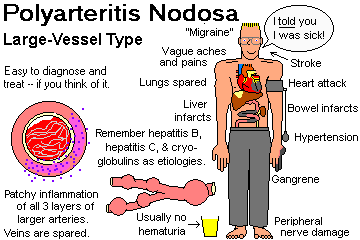
A serious disease characterized by focal, three-layer, necrotizing inflammation of medium-sized and small arteries in many different organs. Classic polyarteritis -- "in the differential diagnosis of everything" -- is still a diagnosis of exclusion.
This inflammation closely resembles the classic type III immune injury. However, you won't identify a particular tissue antigen.
* Very likely, the cause of many (or maybe all) "classic polyarteritis nodosa" is mutant adenosine deaminase, which produces a hugely variable picture (NEJM 370: 921, 2014).
{16917} fibrinoid necrosis of artery (polyarteritis nodosa)
{53545} fibrinoid necrosis of artery (polyarteritis nodosa)
|
|
Indeed, around a third of "classic" acute cases were caused by deposition of hepatitis B surface antigen and antibody in the walls of vessels. It still happens a lot but responds nicely to treatment of the underlying disease. (Medicine 74: 238, 1995).
There's also a hepatitis C vasculitis, and a cryoglobulinemia vasculitis, in the old "polyarteritis nodosa" wastebasket. These are being sorted out (Am. J. Med. Sci. 331: 329, 2006).
Since the Chapel Hill Consensus Conference of 1994, most patients who would
have been said to have "polyarteritis nodosa" are now diagnosed with
something else (i.e., hepatitis B or C vasculitis, small-vessel polyarteritis)
instead. We are also now exclusing the paraneoplastic vasculitis syndrome
that otherwise looks exactly like classic polyarteritis nodosa Patients may be of any age. There is a slight male preponderance.
The symptoms depend on what arteries are involved.
A long-after-Chapel-Hill review of what becomes of polyarteritis nodosa patients
shows that (at least in France) the disease remains one of fairly high mortality
(Arth. Rheum. 62: 616, 2010).
The disease involves only short portions of affected arteries. We can conjecture
that a small intimal injury begins a chain reaction, with more polys
going to the involved areas and making things worse. And obviously if the whole arterial system
were involved, death would already have occurred.
Damage to the vessel walls results in thrombosis and infarctions.
Common sites of involvement are peripheral nerve (numbness and weakness), kidney (pain, blood in the urine, high blood pressure); heart, and brain (Rheumatology, op cit.)
Destruction of collagen and elastin in the walls of the damaged vessels causes the "nodose" ballooning ("microaneurysms"). These are of course likely to undergo thrombosis and cause infarcts.
{16920} polyarteritis, angiogram showing aneurysms
The untreated disease is highly lethal and the diagnosis is often missed. Death results from stroke, high blood pressure, kidney failure, or massive bleeding from GI infarcts.
Unfortunately the disease simulates "aches and pain of the 'flu" (not surprising, since there is a vasculitis), and goes neglected for weeks or even years.
One feature that distinguishes classsical ("large and medium-size vessel") polyarteritis nodosa from other inflammatory diseases of the vessels is that it typically does not involve the lungs.
{11987} polyarteritis nodosa, infarcts on
the elbows
{11988} polyarteritis, gangrene
We still suggest a biopsy. The best place to biopsy is probably a tender muscle or testis -- or do a renal angiogram and see the nodules on the arteries.
Microscopically, look for lots of polys, eos, and/or monos in all three layers of the arterial wall. Leakage of protein from the plasma into the damaged vessel produces "fibrinoid" ("fibrinoid necrosis", etc.,) typical of any type III immune injury. However, there's usually not much immunoglobulin, so perhaps this isn't really the mechanism.
After the lesions heal, you can still see the damaged elastic membranes. Beware! There may well be active lesions elsewhere in the body!
{46396} old polyarteritis nodosa, burned-out scarred lesion showing disrupted elastica (elastic stain,
of course)
{16918} old polyarteritis nodosa, elastic stain
{16922} old polyarteritis nodosa, elastic stain (the
old break in the internal elastic membrane is obvious;
organized thrombus in the center stains with elastic stain also)
It is important to make the diagnosis, because this deadly disease responds very well to treatment (prednisone plus cyclophosphamide).
* KAWASAKI DISEASE ("mucocutaneous lymph node syndrome") of children has identical histology to classic polyarteritis nodosa, but we will cover it later (NEJM 315: 1143, 1986, classic article).
It also would be logical to talk about HENOCH-SCHONLEIN PURPURA ("IgA vasculitis") here. This is a fairly common, fairly mild, ANCA-negative childhood illness (severe in adults) caused by IgA deposition in specific sites. More about this later.
MICROSCOPIC POLYANGIITIS ("small vessel polyarteritis", anti-myeloperoxidase disease, p-ANCA disease, small-vessel polyarteritis)
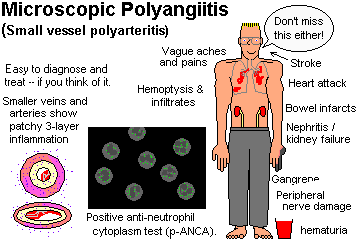
The involved vessels are smaller, little veins can be involved as well as arteries, the lung is often involved (lung pathology Arch. Path. Lab. Med. 121: 144, 1997), the glomeruli of the kidney are often damaged (typically a segmental necrotizing crescentic non-granulomatous glomerulonephritis), and almost all the patients have p-ANCA.
Again, cyclophosphamide plus prednisone is an effective remedy.
WEGENER'S GRANULOMATOSIS ("pathergic granulomatosis"; "granulomatosis with polyangiitis"; Am. J. Med. Sci. 321: 76, 2001)
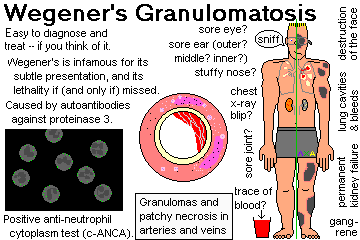
This is a multi-system vasculitis caused (somehow) by antibodies against proteinase 3 (* "p29"; apparently the same as "myeloblastin" 88: 9253, 1991; review Am. J. Path. 139: 831, 1991). Exactly why this produces granulomas is especially puzzling.
Reports that differ markedly from these tend to come from obscure institutions. You probably want a biopsy even if it looks like Wegener's clinically and there's a positive c-ANCA (Lancet 346: 926, 1995). Reviews with caveats: J. Clin. Path. 52: 124, 1999, Pathology 31: 38, 1999; Am. J. Clin. Path. 111: 507, 1999 (consensus statement).
You can also get an ELISA anti-PR3 tube test; it's sensitive for Wegener's, but not very specific: Postgrad. Med. J. 76: 287, 2000. There's also one for anti-myeloperoxidase; neither are specific enough to guide therapy for their respective diseases (Am. J. Clin. Path. 129: 42, 2008).
There is a third specificity for ANCA -- anti-LAMP2; these damage endothelium, attract and degranulate neutrophils, and may be a missing link for cases that don't quite fit. J. Am. Soc. Nephro. 21: 2169, 2014.
Wegener's is characterized by acute necrosis and inflammation (* neutrophils, lymphocytes, macrophages, maybe granulomas) of short portions of the walls of arteries and veins, primarily involving the respiratory tract, kidneys, and spleen.
In addition, there are extravascular, necrotizing granulomas in the respiratory tree, especially the
nasal sinuses and lung parenchyma. These tend to ulcerate / cavitate. (* One can mistake it for TB or fungus infection -- to make the diagnosis of Wegener's, there must be no demonstrable
micro-organisms.)
or fungus infection -- to make the diagnosis of Wegener's, there must be no demonstrable
micro-organisms.)
These patients commonly die from exsanguinating pulmonary hemorrhage.
* LETHAL MIDLINE GRANULOMA was a clinical syndrome usually caused either by Wegener's or a rare, refractory NK-cell lymphoma that induces granulomas. Prior to the immunoperoxidase era, we were unable to tell them apart. The nose, then the center of the face, sloughs. See Ann. Plast. Surg. 37: 532, 1996. Cocaine and at least one rare genetic disease can produce the same picture (Blood 116: 1263, 2010).
Most (not all) Wegener's cases show severe injury to the renal glomeruli (* segmental-necrotizing and/or granulomatous and/or rapidly-progressive glomerulonephritis).
A majority of Wegener's patients have involvement of their eyes, and many have problems with their ears (pinna, Eustachian tube problems, nerve VIII). The peripheral nerves are sometimes damaged (by microinfarcts). Several cases with skin involvement have been mistaken for pustular acne.
* Even without a positive c-ANCA blood test, today's savvy pathologist calls "Wegener's" if he/she sees vasculitis, "geographic" necrosis, and granulomas in the right mix and setting. If only two are present, the call can be made if there is lung, head-and-neck, AND kidney involvement; otherwise it'll be "probable" Wegener's. If only one is present, the biopsy can at most be "suggestive".
{40524} Wegener's; vasculitis lesion is in center
{40520} Wegener's; giant cells and damaged tissue
{40525} Wegener's; burned-out lesion (elastic stain, showing disrupted elastica)
{40526} Wegener's, vasculitis, note giant cell at top of picture
{40527} Wegener's; necrosis and giant cell
{11990} Wegener's, necrosis of elbow
 Wegener's
Pittsburgh Pathology Cases
Wegener's
Lung pathology series
Dr. Warnock's Collection
The molecular biology is still not fully understood.
Neutrophils express some proteinase 3 on their surfaces, and are probably attacked and eviscerated by the antibodies. They spill their granules, which must cause damage. The body sites in which the most neutrophils ordinarily occur are the nose and the lungs. Why glomeruli are involved is more puzzling.
Apparently, endothelial cells also express proteinase 3 on their surfaces in response to various cytokines, and this must be part of the problem, too (remains mysterious Clin. Imm. 97: 171, 2000).
* Some macrophages also express proteinase 3 on their surfaces, perhaps accounting for the granulomas Am. J. Path. 139: 723, 1991.
Patients are usually young adults. They complain first of stuffy nose and other ill-defined (or "hypochondriac") symptoms. Because inflammation of the vessels is prominent, the disease simulates "aches and pains of the 'flu", and goes unrecognized.
The extent of disease is conventionally described using the mnemonic ELK: Ears-nose-throat, Lungs, Kidneys.
Although serology is helpful, we still suggest a biopsy. The most important thing to remember about "Wegener's" is that it is treatable using cyclophosphamide (* with or without prednisone), and you must make the diagnosis.
Tissue diagnosis is usually accomplished by open biopsy. The pathologist will want to find two of these three:
("geographic necrosis")* Biopsying a site of visible necrosis on physical exam is usually better than a renal biopsy -- the renal lesions are usually impossible to tell from microscopic polyangiitis or some other vasculitis, and the kidneys may be spared completely. You may try a transbronchial biopsy first, though the yield is low.
* Antibiotics were used for treatment for Wegener's during the 1990's with claims of good results: Arch. Int. Med. 151: 1649, 1991, many others. Perhaps a soluble bacterial antigen is the cause after all -- or bacteria keep ANCA-positive vasculitis going and cause relapses (CpG motifs as the antigen -- Rheumatology 50: 689, 2011). Rituximab is now considered effective for ANCA-disease in which standard therapy is too toxic: Rheumatology 45: 1432, 2006. Update on "the new biotech stuff" for tough-to-treat Wegener's: JAMA 298: 655, 2007; NEJM 363: 221, 2010.
* The very fact that we can talk about what medications to use to maintain remission in Wegener's (methotrexate vs. leflunomide: Rheumatology 46: 1087, 2007) reminds us of our past triumphs in treating a once-uniformly-fatal illness.
In the ANCA diseases, the antibody titers may or may not remain high, regardless of whether treatment is working: J. Rheum. 32: 2167, 2005.
* Friedrich Wegener was chief pathologist at Lodz, a Jewish ghetto, under the Nazi regime. He joined the National Socialist party in 1932 (as you or I might join the Republicans or Democrats or some other political party), before Hitler was even leader, when the party's historic agenda was simply to set government policies to favor business and rebuild an strong German national economy. Dr. Wegener cooperated fully with the victorious Allies and was never charged as a war criminal. Yes, he knew something really bad was happening at Lodz and that, regrettably, he could not stop it (Rheum. 45: 1303, 2006; Chest 132: 739, 2007). Dr. Wegener was also a truly great pathologist and physician. Many of us still feel gratitude to those who've made important contributions to human knowledge, and it seems we owe something to a man who dedicated his life to the frontiers of pathology. Whether "Wegener's granulomatosis" should be renamed is a question you'll need to decide for yourself. The term "Reiter's syndrome" is rightly going out of use because Reiter didn't actually discover it, and because Reiter went on to become an enthusiastic participant in the Buchenwald atrocities. On the one hand, nobody likes to be reminded that the man whose discovery ultimately saved their life happened to belong to the Nazi party during WWII. On the other hand, the disease itself is important not to forget. I worry that a physician who cannot remember the politically-correct terms "ANCA-associated granulomatous vasculitis" or "granulomatosis with polyangiitis" might be afraid to ask teammates the life-saving question: "Could this be Wegener's?" You decide.
CHURG-STRAUSS VASCULITIS
The asthma is usually new (and permanent: Lancet 361: 587, 2003), and the disease responds better than its eosinophil-poor counterparts to glucocorticoids. You decide.
There are numerous eosinophils in the inflammatory lesions. Lung involvement is common, and small veins are involved as well as small arteries. Thankfully, almost everybody survives the illness nowadays. If leukotriene receptor antagonists are ever a cause, it is rare (Am. J. Med. 115: 284, 2003). Pathologists review Am. J. Clin. Path. 114: 767, 2000. Clinicians: Am. J. Med. 115: 284, 2003.
Splitters distinguish "eosinophilic granulomatosis with polyangiitis" -- you are free to decide for yourself whether having granulomas makes it a separate entity. Lancet 385: 480, 2015.
Churg-Strauss
Lung pathology series
Dr. Warnock's Collection
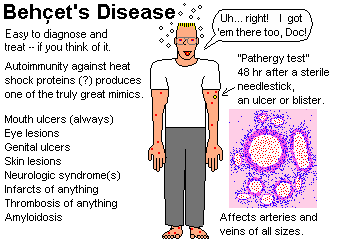
BEHÇET'S DISEASE (Behcet's disease; NEJM 341: 1284, 1999; Medicine 91: 18, 2012)
It's probably due to local production
of T-cells directed against heat shock proteins (HSP-60)
(Med. Exp. Imm. 113: 100, 1998. others).
Streptococci
seem to be triggers somehow, so some of these
people get maintained on penicillin.
Pathology: Arth. Rheum. 39: 1926, 1996.
Criteria:
Must have two of these:
* Behcet's can produce pericarditis, myocarditis, and/or endocarditis with valve problems (Medicine 91: 25, 2012). Another common, curious, and baffling lesion is pulmonary artery involvement, with aneurysms and thromboses, as well as nodules and cavities in the lung parenchyma (Medicine 91: 35, 2012).
* There's a strong link to HLA-B51 (HLA-B5 group antigen). It's a major cause of blindness in Japan. Behçet's can do lots of things, including producing a host of neurologic problems: Arch. Neuro. 53: 691, 1996, and/or thrombosis of anything. Interferon-α for Behçet's syndrome: Arch. Derm. 134: 1010, 1998. Thalidomide: Ann. Int. Med. 128: 443, 1998; Lancet 363: 1802, 2004. Cyclosporine Br. J. Rheum. 36: 1113, 1997. Azathioprine: Arth. Rheum. 40: 769, 1997. Autologous stem cells: Ann. Rheum. Dis. 66: 202, 2007. Apremilast, a phosphodiesterase-4 inhibitor: NEJM 372: 1510, 2015.
Behçet's gets missed. Consider it in patients with "unexplained" intestinal perforation (Dig. Dis. Sci. 55: 2904, 2010).
Non-substituted: Patchy deposits in the hearts of the elderly ("senile cardiac amyloidosis") or widespread in the elderly ("senile systemic amyloidosis" -- Arch. Int. Med. 165: 1425, 2005).
Probably both are mild illnesses.
COMPOSITION OF AMYLOID
AMYLOID NAME
CLINICAL CORRELATIONS
Serum amyloid associated protein (acute phase reactant)
Amyloid AA
chronic inflammation
(leprosy
,
osteomyelitis, tuberculosis,
rheumatoid arthritis, etc.); New Guinea amyloid goiter
Immunoglobulin light chains
Amyloid AL
B-cell proliferations (plasma cell myeloma, * marginal zone lymphoma, benign hyperplasias)
Transthyretin ("prealbumin")
Amyloid ATTR (AF)
Substituted: Familial syndromes (Amyloid ATTR)
Various endocrine proteins
Amyloid Esub
Stromas of endocrine tumors (various ones; prolactin is APro, calcitonin is ACal, etc.)
Beta-two microglobulin
Amyloid H (beta-2m)
Chronic hemodialysis patients
Amyloid beta protein
Amyloid beta / A4
Cores of Alzheimer senile plaques; cerebral blood
vessels in Alzheimer's and some congophilic
angiopathy patients
Tau microtubule protein
tangles, plaques, and granules of Alzheimer's
Amylin (islet amyloid-associated peptide)
Amyloid IAPP
stroma of insulinomas; islands of some type II diabetics
Prolactin
(An amyloid E)
Old folks' pituitaries
Atrial natriuretic peptide/factor
A-ANF
Old folks' atria
* Semenogelin I
ASgI
Old guys' seminal vesicles
Keratin
AKer ("Amyloid D")
Some skin diseases
* Gamma trace alkaline microprotein (cystatin C)
Hereditary congophilic angiopathy of Iceland
* Gelsolin
AGel
Familial Finnish (Am. J. Path. 126: 1223, 1990)
Prion Precursor Protein (PRPP)
AScr
Prion diseases
* Apolipoprotein A1 (Am. J. Path. 154: 221, 1999)
AApoA1
Familial Iowa amyloid; dog amyloid
* OSMR
?
Familial cutaneous amyloidosis (nodular / lichen / macular) Arch Derm 145: 695, 2009.
There are many, many other rare familial amyloidosis syndromes (Blood 90:4799, 1997).
 Portuguese Familial Amyloidosis
Brazil Pathology Cases
In Portuguese
Reviews: Postgrad. Med. 96: 119, 1994; Mayo Clin. Proc. 74: 490, 1999. Molecules NEJM 349: 583, 2003.
AMYLOID is a class of insoluble, homogeneous, eosinophilic ("hyaline") substances that accumulate in extracellular spaces. Their common link is that they are BETA-PLEATED SHEETS (rather than α-helices), and therefore cannot be effectively handled by the body.
* All amyloids are now known to be built up from soluble oligomers with a particular conformation (Science 300: 486, 2003) that seems necessary to their becoming beta-pleated.
* Proteomics is now available to determine the protein from which an amyloid is synthesized, using a tiny fragment of subcutaneous fat (Blood 119: 1844, 2012).
Amyloids mostly don't go away, and eventually the surrounding cells undergo "pressure atrophy".
Whatever is really happening, enough amyloid in an organ makes it rubbery and waxy and (sometimes) useless.
* There is much interest right now in how amyloid is laid down, and you'll read about a substance called "amyloid enhancing factor" that must be produced first (Arthr. Rheum. 48: 1430, 2003, lots more).
AMYLOIDOSIS is a group of systemic and (?) localized diseases with varied and often bizarre clinical presentations.
The classic forms of amyloidosis are not among the commonest diseases, though they are not rare.
Alzheimer's disease, now recognized to be one of the commonest and deadliest diseases, regularly includes amyloid beta/A4 deposition in the brain and its vessels. (It's real amyloid, Am. J. Path. 143: 1594, 1993).
Amyloidosis (probably AF) involving the heart is responsible for an unknown number of cases of heart disease in the elderly.
There is now a scanning technique that lights up amyloid using a curious substance called [(11)C]Pittsburgh Compound B (Neurology 68: 1718, 2007).
Amyloid was named by Dr. Virchow, who noticed that iodine turned it orange-brown and subsequent application of sulfuric acid turned it purple-blue. Because starch undergoes the same color reactions, amyloid means "starch-like".
* Amyloidosis as a disease was discovered by Dr. Rokitansky, who called it "lardaceous change".
The name "amyloidosis" is inappropriate today, because amyloid and starch are different chemically. But nobody liked the suggestion "beta-fibrillosis".
Most amyloids are altered forms of various proteins that exist in the healthy body.
Regardless of its origin and amino-acid sequence, amyloid (and, in us chordates, only amyloid and perhaps tooth enamel) is not an alpha-helix, but a crossed beta-pleated sheet. (Remember Dr. Linus Pauling's two stable secondary structures for proteins?)
This beta-pleated structure results in the marked affinity all amyloids exhibit for Congo Red dye, and for the apple-green birefringence it exhibits when so stained and examined under polarized light.
* Fun to know: Insect chitin and silk acquire their shimmers because they are beta-pleated sheets largely lined in the same direction.
{08129} Congo red
{08132} Congo red, birefringence
* Amyloid stains metachromatically (i.e., a different color from the dye solution, in this case red rather than violet) with crystal violet, and has other exotic reactions with special stains (notably fluorescence with thioflavin T). Ask a pathologist if you're curious.
{17480} crystal violet stain, amyloid (red) in heart
{35978} crystal violet stain, rectal positive for amyloid (red)
Despite its amorphous appearance on light microscopy, electron microscopy shows that 90% of any type of amyloid consists of non-branching fibrils, 70 to 100 angstroms (7-10 nm) across. These are usually crisscross but may be parallel.
Amyloid
Electron micrograph
WebPath photo
These fibrils are the beta-pleated protein, the congophilic component of amyloid.
The remaining 10% of any amyloid is composed of "P-component", a 90-angstrom, pentagonal donut-rod thing.
The P component is pentamers of a glycosylated α-1 globulin ("serum amyloid P-component", SAP), an acute-phase protein similar in sequence to C-reactive protein that is produced by the liver in response to interleukin 1 production by macrophages. It imparts the weak PAS-positivity to amyloid. All about P-component: Proc. Nat. Acad. Sci. 91: 5602, 1994.
The P component, bound to the fibrils, is also required to prevent the amyloid from being degraded by the body. (Ciba F.S. 199: 73, 1996).
* Surprise! P's job in health seems to be to cover over the nuclear dust released from dead cells and control the breakdown of the chromatin, preventing antinuclear antibodies from forming. Nat. Med. 5: 694, 1999. Maybe this is why amyloidosis almost never occurs in lupus (Ed's idea).
And stay tuned -- a biotech antibody against the P-component now seems to clear amyloid: NEJM 373: 1106, 2015.
As noted, all types of amyloid look the same at any magnification.
{08159} iodine treatment
has blackened amyloid in glomeruli
{08165} amyloid, histology, glomeruli
{07937} amyloid between myocardial cells, histology
{11021} amyloid in the kidney, thioflavin T (stains amyloid yellow and everything else black)
{16664} amyloid, electron micrograph
{17334} amyloid, electron micrograph
Renal Amyloidosis
Electron micrographs
VCU Pathology
Amyloidosis often goes unrecognized.
The typical patient with one of the classic forms of amyloidosis takes about a year to be correctly diagnosed.
Isolated cardiac amyloidosis is the problem in an unknown number of elderly patients with heart disease, especially heart block, due to "old age". Biopsy is not usually attempted on these patients. How much is AF and how much is other amyloid awaits clarification.
Alzheimer's disease is ultimately an autopsy diagnosis, and amyloid is a regular finding in these patients' brains (see below).
CLASSIFICATION
* The old categories of "primary" and "secondary amyloidosis" are archaic.
"Primary amyloidosis" was "idiopathic" or cased by cancers of B-cell origin. "Secondary amyloidosis" arose in patients with chronic infections.
"Secondary amyloidosis" supposedly involved liver, spleen, adrenals, and kidneys, while "primary amyloidosis" involved these, the heart, tongue, gut, muscles, skin, nerve, ligaments, and other organs. Even this is not reliable.
Today, amyloids are classified instead by the protein from which they are derived.
AMYLOID DERIVED FROM IMMUNOGLOBULIN LIGHT-CHAINS (AMYLOID AL; "immunocyte-derived amyloidosis", "B-cell dyscrasia with amyloidosis", the old "primary amyloidosis" / amyloid B, etc.).
This is likely to involve many different organs. The amyloid is composed of some or all of the lambda or (* less often) kappa light chains of immunoglobulin molecules.
"Amyloid, light-chain derived" is called "amyloid AL". (* There are rare diseases with light-chain deposition that's not beta-pleated; don't worry about them.)
Most patients have evidence of a hyperactive clone of B-cells.
Many have overt plasma-cell myeloma producing light chains (around 20% of plasma cell myeloma patients eventually get amyloidosis), or related diseases such as B-cell lymphomas or Waldenstrom's macroglobulinemia.
Even more have a "benign monoclonal gammopathy", and this includes most patients who have "idiopathic primary amyloidosis".
Nowadays, it's probably good practice to rule out the hereditary amyloidosis syndromes (transthyretin, fibrinogen -- Blood 115: 2998, 2010 -- , lysozyme, apo-A1) before calling anything "light-chain amyloidosis": NEJM 346: 1786, 2002; Medicine 85: 66, 2006.
AMYLOID DERIVED FROM AAP PROTEIN (AMYLOID AA, "reactive systemic amyloidosis", the old "secondary amyloidosis"; * "permanganate sensitive amyloidosis", "amyloid A", etc.; old review Medicine 70: 246, 1991; new review NEJM 356: 2361, 2007)
The amyloid is composed of a portion of "serum amyloid associated protein" (SAA ; AAP; a serpin).
This large serum protein ordinarily is present in very low quantities. The liver increases AAP production by several orders of magnitude during the "acute phase reaction" in response to interleukin 1 from macrophages.
* Macrophages release interleukin 1 when they are phagocytizing something, and it alters the levels of most of the proteins in the plasma. More about this when we see you again.
* Of the three common amyloids, this is the only one that loses congophilia on treatment with potassium permanganate.
Most of the patients with classic "secondary" amyloidosis have this type of amyloid.
These patients have some disease with ongoing breakdown of cells and thus longstanding activation of their acute-phase proteins, including AAP. After a few years, amyloidosis may develop.
Important causes of reactive systemic amyloidosis are longstanding tuberculosis,
leprosy,
syphilis,
osteomyelitis, bronchiectasis, long-term cystic fibrosis survivors,
paraplegia (bedsores and bladder infections),
Crohn's enteritis (Gastroenterology 112:1362, 1997),
and
heroin skin-poppers.
More recently recognized causes of reactive systemic amyloidosis are rheumatoid arthritis (up to one third of the really bad cases), familial mediterranean fever (review Arth. Rheum. 56: 1706, 2007), * polymyositis, * inflammatory bowel disease, * renal cell carcinoma, * Hodgkin's disease, * BehÇet's disease (Nephron 52: 154, 1989), and * chronic Reiter's syndrome (Am. J. Kid. Dis. 14: 319, 1989).
Obviously, not everyone with longstanding elevations of AAP gets amyloidosis AA. Something else must be wrong, probably with AAP processing by macrophages.
* Of course, serum AAP is not a suitable blood test for amyloidosis; it will be elevated in anyone during the acute phase reaction.
AMYLOID DERIVED FROM TRANSTHYRETIN (AMYLOID ATTR; old names have included ncluding "amyloid AF", "familial amyloid", "amyloidosis C", "old age amyloid", "senile amyloid" (Virchows Archiv. 442: 252, 2003), * "amyloid Sc1"=senile cardiac, first type)
Beta-pleated transthyretin (* "prealbumin") appears in many elderly people.
Though widespread, it is seldom significant except in heart, where it is accounts for an unknown number of cases of unexplained heart block (failure to conduct the impulse from atria to ventricles), other rhythm disturbances, and sudden death.
Massive deposits of "senile amyloid" interfere with ventricular function, but just a little can disrupt the conduction system. If diagnosed (* echocardiography helps), it is called "senile cardiac amyloidosis".
The problem is especially common in older black people, who often carry a signature mutation: NEJM 336: 466, 1997.
* Clinicians now talk about "senile systemic amyloidosis", noting that it is unlikely to cause non-cardiac problems. It is usually missed clinically (Int. J. Cardiol. 32: 83, 1991). Old talk about this all being the result of an amino acid substitution in transthyretin was wrong (Proc. Nat. Acad. Sci. 87: 2843, 1990).
A substituted amyloid C is a very common cause of heart block in older blacks. New England Journal of Medicine 336:466, 1997.
Amyloid ATTR also occurs in other clinical settings.
It is the amyloid of most familial amyloidosis syndromes (some have amyloid AA instead). A transthyretin with an amino-acid substitution (* typically valine --> leucine in position 30) is deposited as amyloid. Polyneuropathy is the principal feature of this type of amyloidosis, and of course these are autosomal dominant diseases. (* Roundsmanship: Look for scalloped pupils in familial amyloidosis!)
* Some localized cerebral amyloidosis cases are amyloidosis ATTR.
* Liver transplantation as a highly effective therapy for familial amyloidosis ATTR: Lancet 341: 1113, 1993.
* Most recently, transthyretin amyloidosis became the first disease managed effectively by RNA interference. See NEJM 369: 819, 2013.
AMYLOID DERIVED FROM A HORMONE POLYPEPTIDE
Occasionally such material fills much of the stroma of tumors of the corresponding endocrine organ.
Carcinoma of the C-cells of the thyroid (* "medullary carcinoma of the thyroid") has a stroma rich in beta-pleated precalcitonin (Endocrinology 145: 5465, 2004).
The islets of many adult-onset diabetics have abundant amyloid made from amylin ("islet-associated amyloid polypeptide, IAPP") You may find it in the stroma of islet-cell tumors, too.
AMYLOID COMPOSED OF BETA-2 MICROGLOBULIN ("Amyloid H"; Amyloid beta2M)
Amyloid arthropathy, mostly limited to the joints and flexor retinaculum, is a problem in kidney-failure patients who have been on hemodialysis for years.
Beta-2 microglobulin is the light chains of HLA antigens. It is increased in the serum of chronic renal failure, and it is the beta-pleated substance in cases of dialysis-related amyloid arthropathy that have been studied.
Unlike most amyloids, this does seem to regress when the hemodialysis is replaced by transplanted kidneys: Lancet 338: 335, 1991.
* Amyloid H appears more on the serosa of the gut than on the mucosa, accounting for the difficulty of diagnosis. Journal of Clinical Pathology. 50(10):873-5, 1997 Oct.
* There is an autosomal-dominant hereditary form: NEJM 366: 2276, 2012.
AMYLOID COMPOSED OF Aβ PROTEIN / AMYLOID BETA PROTEIN (Am. J. Path. 142: 1449, 1993)
This is the amyloid in the senile plaques, neurofibrillary tangles, and cerebral vessels of Alzheimer's disease and Down's syndrome.
* The accumulation of the protein in the cerebral blood vessels ("congophilic angiopathy") is not the main problem in Alzheimer's, but the same protein accumulates in "Dutch congophilic angiopathy", where it produces hemorrhages.
AMYLOID COMPOSED OF INFECTIOUS PRIONS (PrP)
The amyloid within the brain in Creutzfeldt-Jakob disease. More later.
AMYLOID DERIVED FROM ATRIAL NATRIURETIC FACTOR ("AANF", "atriopeptin")
This hormone becomes droplets of amyloid in the atria. It is present in most hearts from elderly people, and probably has no significance. See Exp. Mol. Path. 52: 266, 1990; Bioch. Biophys. Res. Comm. 148: 1087, 1987.
* Another amyloid also accumulates here ("isolated atrial amyloid", "AIAA"). One group of pathologists suggests it underlies much of the "idiopathic atrial fibrillation" seen in older people (Circ. 106: 2091, 2002).
OTHER AMYLOIDOSIS SYNDROMES
Amyloids of uncertain composition
"Congophilic angiopathy" of the vessels of the brain (as in Alzheimer's disease) also occurs in dementia pugilistica, and other brain diseases, in which its structure awaits clarification.
* A severe form of cerebral congophilic angiopathy may occur alone and produce dementia and multiple intracerebral hemorrhages (see Neurology 35: 625, 1985). At least some of these patients have mutant gamma-trace alkaline microprotein ("cystatin C"; NEJM 311: 1547, 1984; Proc. Nat. Acad. Sci. 91: 1416, 1994). A new one features a particular mutation of APP itself (Arch. Neuro. 67: 987, 2010).
* Amyloids composed of beta-pleated apolipoprotein A turn up occasionally in families (update Am. J. Path. 179: 1978, 2011), and they are quite common in the lung vessels of old dogs (Am. J. Path. 141: 1013, 1992).
In a few familial syndromes with generalized amyloidosis, the protein of origin has not been identified.
Localized amyloidosis is diffuse infiltration of an organ, perhaps the result of some mutation in a protein limited to that organ. The best-known examples are isolated involvement of the tongue, and isolated laryngeal amyloidosis (J. Lar. 117: 647, 2003; laser rx). Older men may have heavy involvement of the seminal vesicles with no other problems; so far as we know, this means nothing. Several hereditary corneal diseases feature amyloid.
{38620} amyloid, tongue
{22023} amyloid, cornea
{22026} amyloid, cornea, histology
{22029} amyloid, conjunctival surface, histology
An "amyloidoma" (yes, another non-tumor ending in "-oma") is a single mass of amyloid with a foreign-body reaction around it. These are poorly understood.
Amyloidoma
Lung pathology series
Dr. Warnock's Collection
{38899} amyloidoma, histology; note foreign-body reaction
ORGAN INVOLVEMENT IN SYSTEMIC AMYLOIDOSIS SYNDROMES
KIDNEY
Amyloid gets deposited in the glomeruli, the blood vessels, and around the tubules.
Usually the glomerular basement membrane becomes too leaky to proteins, and the patient gets the "nephrotic syndrome".
If the patient with renal amyloidosis survives, eventually the amyloid plugs up the glomeruli and that's the end of the kidneys.
Renal involvement is a major cause of death in amyloidosis.
{10880} renal amyloidosis, congo red
{10883} renal amyloidosis, congo red
{11021} renal amyloidosis, thioflavin T
{16785} amyloid in the glomerulus
{17171} amyloid in the glomerulus
HEART AND VESSELS (review Arch. Int. Med. 166: 1805, 2006; Prog. Card. Dis. 52: 247, 2010; Am. J. Med. 124: 1006, 2011
Amyloidosis derived from transthyretin and limited to the heart is described above, and when cardiac biopsy became commonplace in the 1980's, it was recognized as relatively frequent.
In any form of systemic amyloidosis, involvement of the heart may be severe or mild.
Amyloid deposition begins in the subendocardium. In relatively mild cases, tiny deposits of amyloid occur on the atrial endocardium that resemble dewdrops. But more often, there's nothing at all abnormal grossly.
* Almost all elderly people have traces of amyloids of unknown composition in their aortas, independent of atherosclerosis, as well as deposits of atrial natriuretic peptide (amyloid IAA). These are probably harmless. Of course, many will also have some transthyretin-based amyloid, and most of these people are probably asymptomatic.
The heart in severe cardiac amyloidosis, however, is stiff and heavy. This is the usual cause of adult-onset "restrictive cardiomyopathy" (stiff-heart disease).
Half of patients with amyloidosis AL and cardiac involvement have pump failure or dangerous rhythm disturbances.
* You'll make the diagnosis of severe cardiac amyloidosis by biopsy or echo.
{08111} amyloid, heart
{24519} amyloid heart, gross (looks and feels like candle wax)
{10685} congo red stain (my case)
{10688} congo red, polarized (my case again)
The vessel walls everywhere are often heavily involved, though infarcts are unusual. Both amyloid AA and amyloid AL involve vessels heavily (Mod. Path. 3: 4, 1990); particularly, the coronary arteries are likely to be narrowed (Am. J. Med. 118: 1287, 2005).
{03386} amyloid, coronary artery (left: Sirius stain; right: crystal violet)
Amyloid-laden vessels are brittle. This produces problems ranging from trivial "post-proctoscopy palpebral purpura" to dread intracranial hemorrhage (fortunately rare in the common systemic amyloidosis syndromes).
GI TRACT (Dig. Dis. Sci. 15: 155, 1997)
Stiff tongue is a well-known problem in both systemic (AL) and localized (organ-specific) amyloidosis.
Amyloid deposits around the blood vessels of the gut result in malabsorption.
Amyloid in the ganglia and wall of the gut makes normal peristalsis impossible.
{24551} amyloid in small bowel (vessels and outer layer of muscularis propria)
{10370} amyloid in gut wall (Congo red and unstained slices)
LIVER
Amyloid is deposited first in the perisinusoidal spaces, and this appears to crunch the hepatocytes after a while.
However, because the sinusoids remain open and unscrambled, the liver seldom fails, and pressure in the portal vein usually remains normal.
Although it has long been taught that liver biopsy is very dangerous if amyloidosis is suspected (i.e., the amyloid holds the sinusoids wide-open, inviting massive hemorrhage), Mayo's recently found the danger isn't real. Series Medicine 82: 291, 2003; also confirms the poor prognosis.
{39805} amyloid in the liver
ADRENAL GLAND
Amyloidosis can and does present as adrenal cortical insufficiency ("Addisonism").
{24607} amyloid, adrenal (looks and feels like candle wax)
BLEEDING TENDENCY
First problem: amyloid deposited around small blood vessels renders them more fragile.
Thus, problems similar to those seen in scurvy result. Look for little hemorrhages in the tissues around the eyeballs.
* Second problem: amyloid AL can soak up coagulation factor X, requiring plasma exchange (Am. J. Haem. 54: 68, 1997).
SPLEEN
Amyloid deposition in the spleen is usual in systemic amyloidosis.
Most patients get increased circulating platelets, but the relative loss of splenic function is among the least of these peoples' problems.
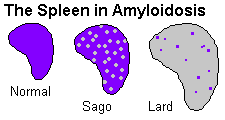 There are two classic, unappetizing descriptions of amyloid-loaded spleens seen at autopsy.
A "sago spleen" has its amyloid in the white pulp. (Sago is tapioca.) A "lardaceous spleen" has its amyloid in the red pulp (* and usually indicates amyloid AL -- see Mod. Path. 3: 419, 1990). It looks like lard. The distinction is of no practical importance, but every physician seems to remember it!
SKIN
The skin may be involved trivially in generalized disease.
{12215} amyloid, eyelids
* Several minor skin diseases feature local accumulations of an amyloid derived from a keratin ("amyloid D", AKer).
NERVES
Some weakness and loss of sensation is common in amyloidosis, with or without unpleasant sensations. (* This is especially common in hereditary amyloidosis syndromes. It also occurs early in amyloidosis AL -- be suspicious.) Morphology Arch. Path. Lab. Med. 124: 114, 2000.
WRIST
Carpal tunnel syndrome (too-tight flexor retinaculum) developing in an older person makes the astute clinician suspect amyloidosis. (* Check Tinel's sign.)
LUNGS
At least three patterns occur: nodules (usually asymptomatic and due to a local tame lymphoproliferative neoplasm; Am. J. Surg. Path. 37: 406, 2013), diffuse interstitial infiltration (dyspnea), and tracheobronchial amyloidosis (obstructing the larger airways; Medicine 79: 69, 2000; treatment with the new external-beam machine Mayo Clin. Proc. 76: 853, 2001).
MAKING THE DIAGNOSIS
To diagnose amyloidosis, you must send the lab some solid tissue and the pathologist must find amyloid in it.
* (Don't try the old intravenous Congo Red test on your patients. Allergic responses are common.)
If the amyloid is discovered on biopsy of kidney, liver, or other organ, you have the diagnosis. (This is often a big surprise.)
Your pathologist can distinguish the common amyloids histochemically. Pitfall: Especially on kidney biopsy, immunostatining is often unreliable and a pathologist should stain both for immunoglobulin and serum amyloid A (Arch. Path. Lab. Med. 131: 917, 2007).
Be suspicious that your older patients have amyloidosis. ("Amyloidosis is in the differential diagnosis of just about every symptom".)
Current practice is to cut off a piece of gingival or rectal tissue and send it to the pathologist. It is polite and helpful to mention you are looking for amyloid.
Such a biopsy will demonstrate amyloid ("the biopsy is positive") in majority of advanced cases. Negative biopsy does NOT exclude systemic amyloidosis!
Aspiration of subcutaneous fat is an okay way to start looking for amyloid (Am. J. Med. 82: 412, 1987 -- detects the common amyloids but not amyloid H). It's now mainstream, with a claimed sensitivity of up to 90% (Arth. Rheum. 54: 2015, 2006. Gastric biopsy has been promoted as high-yield (Hum. Path. 16: 1206, 1986), and more recently the value of the lip ("minor salivary gland") biopsy has been reaffirmed (you'll pick up Sjogren's in the process: Arth. Rheum. 59: 714, 2008).
If you find amyloidosis, you may want to check the patient over for some underlying disorder (i.e., B-cell neoplasm, chronic infection). If you find something treatable, you can slow down, but probably not reverse, the amyloid deposition.
TREATMENT AND PROGONSIS
We wish we had more to offer people with systemic amyloidosis.
Untreated patients with amyloidosis AL usually die around one year after diagnosis from heart problems, but about 5% make it to ten years with today's chemotherapy (Blood 93: 1062, 1999).
Patients with amyloidosis AA usually die around ten years after diagnosis from kidney failure.
Some specific ways of helping do exist.
Eprodisate is one of a new class of medications that interferes with the polymerization of amyloid fibrils and their deposition. So far, it's been shown to slow renal disease in amyloidosis A (NEJM 356: 2349, 2007).
Aggressive treatment of amyloidosis AL (Hosp. Pract. 31(8): 67, Aug 15, 1996) is becoming popular. Options include bone marrow transplantation (Br. J. Haem. 100: 229, 1998 & 101: 766, 1998), super-intense melphalan plus stem cell support (Blood 91: 3662, 1998; Am. J. Med. 113: 549, 2002; "not clearly better than melphalan plus dexamethasone" NEJM 357: 1083, 2007; "lots of apparent cures" Blood 110: 3561, 2007), lenaldinomide (as for plasma cell myeloma Blood 109: 465, 2007; Blood 109: 492, 2007), and alfa-interferon.
The treatment of amyloidosis AA is that of the underlying disease. Sometimes amyloid regresses when the underlying disease is cured. But don't count on it. The amount of SSA in the blood, and whether the kidneys have been damaged, determine the outcome (NEJM 356: 2361, 2007).
Cardiac amyloidosis causing heart block can be treated by inserting an electrical pacemaker to keep the ventricles beating properly.
Most hereditary amyloidosis syndromes require genetic counselling.
Congophilic angiopathy will result in intracranial bleeding regardless of any treatment.
* Watch for undiscovered, relative non-toxic anthracyclines that will bind to the beta-pleated sheets, render them more soluble and prevent additional amyloid from being laid down on them. Such anthracyclines are available now, but unfortunately they're deadly poison.
INTRODUCTION TO IMMUNODEFICIENCY
|
|
|
The immunodeficiency states are hereditary, infectious, and iatrogenic disorders. Patients have extra trouble fighting infections.
Systemic diseases that result in immunodeficiency include alcoholism, diabetes, nephrotic syndrome, uremia, and Cushing's syndrome. Cancer is associated by immune suppression by a variety of mechanisms. Malnutrition is another important cause of immunodeficiency. Immunosuppressive drugs are often given to treat autoimmune disease or cancer, or to halt transplant rejection. More about all this later.
In immunodeficiency states that might be due to some mysterious T-cell defect (including all the mysterious B-cell defects), patients generally have a high chance of developing "autoimmune diseases" of various sorts.
Patients with primary deficits in CELL-MEDIATED IMMUNITY almost all have oral candidiasis
(thrush,
yeast infection), and go on to have problems with intracellular parasites
like CMV
herpes simplex and pneumocystis. Bacterial infections are likely to be
sepsis rather than localized. If severe, these will show up soon after birth.
Patients with primary deficits in HUMORAL IMMUNITY
have most problems with pyogenic bacteria (staph,
pneumococcus, H. 'flu,
etc.; also giardia and cryptosporidiosis) These won't show for the first few months of life because of Mom's antibodies.
NEUTROPHIL PROBLEMS
include such illnesses as chronic granulomatous disease, Chediak-Higashi
disease, adhesion molecule problems,
etc., etc. that are not part of today's unit. Expect problems
especially with staph,
pseudomonas, candida,
nocardia,
and aspergillus.
Watch for more immune problems as the bioengineered "biological response modifiers* gain popularity. The TNF-binders infliximab and etanercept, while obviously powerful and useful, have caused opportunistic infections, especially by mycobacteria (NEJM 345: 1098, 2001) and fungi.
Patients with defects in some of the COMPLEMENT components involved in membrane attack (C5, C6, C7, C8, also properdin; C9 is asymptomatic) are especially troubled with neisseria. Patients with defects in C2 are at some risk for increased infections, even if heterozygous (J. Clin. Imm. 23: 297, 2003); homozygotes lacking C2 or C4 are likely to have a lupus-like syndrome (butterfly rash, arthritis, nephritis) . The reason why remains mysterious, and the disease is often very severe (Arch. Derm. 136: 1508, 2000).
Patients with SPLEEN LOSS (sicklers, post-surgery) have particular problems with salmonella, pneumococci, meningococci, H. 'flu, babesia, * listeria, and * DF2 dogbite bacterium.
HEREDITARY IMMUNODEFICIENCIES ("primary immunodeficiencies"; reviews Ped. Clin. N.A. 47(6): Dec. 2000, whole issue; Mayo Clin. Proc. 73: 865, 1998; J. Allerg. Clin. Imm. 111(2S): S-571, 2003. molecular diagnosis of 75 of the ~100 known syndromes is now available, review Lancet 357: 1863, 2001; Nat. Imm. 5: 23, 2004; the Budapest Classification of 2005: J. Allerg. Clin. Imm. 117: 883, 2006.)
X-LINKED AGAMMAGLOBULINEMIA (Bruton's disease, etc.)
The B-cells are absent, fail to mature, or at least fail to respond to infection. The lymph nodes are tiny, without germinal centers. Molecular biology: Science 261: 355 & 358, 1993; J. Imm. 161: 3925, 1998. The deficiency is in Bruton's B-cell progenitor tyrosine kinase (btk, Cell 72: 279, 1993), which is a gene that tells B-cells to multiply when they are stimulated. More on the gene: Nature 361: 226, 1993; alleles Pediatrics 101: 276, 1998.
All classes of immunoglobulins are absent or nearly absent. When mother's immunoglobulins are gone (six months after birth), severe pyogenic bacterial infections begin.
The disease is controlled with injections of gamma globulin. Usually they do quite well.
* Survivors have high prevalence of lupus, polymyositis-dermatomyositis, polyarteritis, rheumatoid arthritis, etc.
* Don't give these kids live polio vaccine.
Primary care physicians: These patients present with early and intractable otitis media. You'll be criticized very harshly if you miss Bruton's (J. Ped. 41: 566, 2002).
ISOLATED IgA DEFICIENCY ("selective IgA deficiency")
"The commonest immunodeficiency syndrome", affecting around one in maybe 300 people (* estimates vary.) No one understands the cause; there's a familial tendency but no obvious pattern of inheritance (update J. Immuno. 169: 4637, 2002).
Serum and secretory IgA are very low or absent. * There is disagreement about whether these patients have "more colds" and "more GI infections", or "have worse allergies", or "are more likely to get collagen-vascular disease", etc., etc.
The most serious hazard is iatrogenic anaphylaxis from the second administration of blood plasma.
* Isolated IgM deficiency also occurs but is much less common than isolated IgA deficiency. Yet other people lack certain subclasses of IgG.
* "Transient hypogammaglobulinemia of infancy" features some extra infections, with a delay in producing some antibody subclass (usually IgG2). These children do produce antibodies in response to challenge immunization, and usually no treatment is required.
DIGEORGE SYNDROME ("thymic dysembryogenesis")
The third and fourth branchial pouches fail to form properly. While the patient is being treated for tetany and cardiac malformations just after birth, the lack of T-cells becomes evident as a fungal, viral, or other infection.
* It is not familial. Most of these kids have monosomy 22q11 (Am. J. Hum. Genet. 51: 964, 1992).
A graft of fetal thymus can be very helpful to some of these patients -- even restorative (NEJM 341: 1227, 1999). But the best seems to be a HLA-matched thymus transplant (Blood 102: 1121, 2003). Update Blood 104: 2574, 2004.
* "Nezelof's syndrome" is a possibly related syndrome; these patients have very little thymic tissue but normal parathyroid hormone levels; some of these patients lack purine nucleoside phosphorylase.
DiGeorge syndrome
Pittsburgh Pathology Cases
SEVERE COMBINED IMMUNODEFICIENCY (SCID) SYNDROMES
A variety of profound deficiencies of both T-cell and B-cell function. Genetics update J. Clin. Inv. 114: 1409, 2004.
There are several autosomal SCID syndromes.
Perhaps half of autosomal-recessive SCID are due to adenosine deaminase deficiency or another (J. Ped. 128: 373, 1996) defect in purine salvage. The problem is that too much adenosine builds up, and gets turned into dATP, which is very poisonous for all lymphocytes. Or maybe the problem is that adenosine deaminase, which normally binds to CD26, the T-cell activation receptor, makes it work; Science 261: 466, 1993, adult alleles Blood 89: 2849, 1997. HLA-matched bone marrow transplant is curative or....
ADA deficiency was the first disease to be cured by introduction of the normal gene into cells. Beginnings: MWN 9/22/86, p. 42; outcome Br. Med. J. 304: 1202, 1992; Science 258: 744, 1992 (both girls are now healthy and in public schools).
* CD45 deficiency: Nat. Med. 6: 343, 2000.
* Deficiencies of the RAG-1 or RAG-2 genes ("recombination activating") that produce lymphocyte diversity cause a severe combined immunodeficiency; there is a forme fruste (Blood 06: 2099, 2005) called Omenn's syndrome (lymphedema, rash -- still a severe disease), and an even milder version with exuberant granulomatous response to Epstein-Barr and some other problems (NEJM 358: 2030, 2008.)
At least three X-linked combined immunodeficiency are known.
In one form of X-linked SCID (* SCID=X1 -- the most common single SCID variant), the interleukin&nbs;2 receptor (* gamma chain, IL2RG, which it shares with the interleukin 4 and 7 receptors) is defective (Blood 83: 626, 1994; Science 263: 1453, 1994; Science 262: 1887 & 1880, 1993; Blood 88: 1708, 1996, J. Clin. Invest. 99: 160, 1997).
This affected David Vetter "the bubble boy". See JAMA 251: 1929 and 1935, 1984; JAMA 253: 74 & 78, 1985 for this fiasco.
In one series, all 12 SCID children whose biochemistry remained obscure were boys, telling me that the major autosomal SCID loci had already been found: J. Ped. 130: 378, 1997.
Gene therapy succeeds for SCID-X1: Science 288: 669, 2000; NEJM 346: 1185, 2002. They stay cured (NEJM 363: 355, 2010; Blood 115: 4356, 2010). Gene therapy continues to succeed for SCID by providing a good IL2RG (Blood 110: 67, 2007). Sadly, at least three of these people have gotten leukemia, apparently from the virus-altered bioengineered cells (J. Allerg. Clin. Imm. 117: 865, 2006); the majority of these leukemias have been cured, and a new viral vector may eliminate the problem (Hum. Gene Ther. 22: 263, 2011).
* Another autosomal recessive form has been found to result from deficient Jak3 protein kinase, which binds to the IL2-R gamma chain cited above (Nature 37: 65, 1995; Science 270: 797, 1995; Blood 90: 3996, 1997; Blood 91: 949, 1998).
Yet another is the human equivalent of the nude mouse (Blood 97: 800, 2001).
And there are at least two interferon receptor deficiencies now known (Nat. Genet. 33: 388, 2003).
* Perhaps you would want to consider the recently-described CISH protein deficiency ("cytokine-inducible SRC homology 2"), in which host are more subject to a range of infections ranging from sepsis to TB to malaria, to be the forme-fruste of SCID. There is diminished ability to signal by IL2 (NEJM 362: 2092, 2010).
A founder mutation causes SCID among the Navajo and Apache (J Immuno 168: 6323, 2002).
* The white cells in a single blood transfusion will give SCID patients graft-versus-host disease, and this can even happen from the maternal lymphocytes that enter the child's bloodstream during childbirth.
ATAXIA-TELANGIECTASIA (* "Louis-Bar syndrome")
A poorly-understood, autosomal-recessive systemic problem involving brain (* loss of Purkinje cells), vessels, and the immune system. Something is wrong with gene expression and tissue differentiation. The disease is inherited as an autosomal recessive * on 11q22-23 -- gene cloned Science 268: 1749, 1995; NEJM 333: 777, 1995), and patients have fragile chromosomes, with notable break points at sites involved in T-cell receptors and immunoglobulins and a tendency for both B-cells and T-cells to undergo apoptosis (J. Immuno. 189: 261, 2012).
* Interestingly, most of the recombination events take place within, rather than between, individual chromosomes (Science 260: 1327, 1993.)
AT heterozygotes (around 0.5% of humankind) have poor tolerance for radiation therapy; they may need to be distinguished from other patients in designing protocols, establishing doses, etc. They also have a clear increase (3.5 x others) in cancer risk. Stay tuned for improved identification of these unfortunates.
Cellular immunity against viruses is poor, and many of these patients cannot make IgA or IgE. Patients eventually die from lung infections or cancer.
{53740} ataxia-telangiectasia, patient (all you can tell from this picture is this is some kind of nervous system disease)
WISKOTT-ALDRICH SYNDROME ("immunodeficiency with thrombocytopenia and eczema"; Blood 103: 456, 2004)
Deficiency (usually) of WASP, an important but poorly-understood protein. It is as an X-linked recessive trait. The severity is widely variable. Update on the alleles: J. Immuno. 175: 1329, 2005.
Autoimmune disorders are fairly common. There is a moderate increase in lymphomas. Both are probably due to hyperplasia of the B-lymphocytes.
Affected boys have eczema, low platelet counts and volumes (they are fragile and break in the ciculation: Blood 94: 509, 1999), and repeated infections associated with variable losses of cellular immunity (especially against viruses) and/or hypercatabolism of immunoglobulins (mostly affecting IgM).
The prognosis is guarded unless treatment with bone marrow transplantation is successful (Blood 82: 2961, 1993, update Blood 121: 1510, 2013). If no donor is available, splenectomy (to increase platelet counts) can add several good years, and cord blood from unrelated donors offers hope as well (J. Ped. 142: 519, 2003).
Gene therapy for Wiskott-Aldrich: Two likely cures NEJM 363: 1918, 2010; series JAMA 313: 1550, 2015. Update on gene Rx: JAMA 313: 1522 & 1550, 2015.
* Chromosomes are stable in this disorder.
* Another allele gives only thrombocytopenia: Blood 90: 2680, 1997.
* About all we know so far about WASP is that it enables expression of CD43 on all lymphocytes.
SEX-LINKED LYMPHOPROLIFERATIVE SYNDROME ("Duncan's disease")
Boys who are unable to deal with the Epstein-Barr virus
("infectious mononucleosis virus"), and
develop lymphoma as a result. Even if the do not meet Epstein-Barr,
they are likely to develop lymphoma in childhood anyway.
(* Future pathologists: Erythrophagocytosis.)
The gene is SH2D1A and the protein is under study: Nat. Genet. 20; 129, 1998, PNAS 95: 13765, 1998.
* T-CELL MEMBRANE DEFECTS (J. Allerg. Clin. Imm. 109: 747, 2002)
A group of hereditary syndromes that have only recently been characterized. They are described well in Big Robbins.
Mutant CD3-gamma subunit, the first defective T-cell marker syndrome: NEJM 327: 529, 1992.
* Thankfully rare: Idiopathic CD4+ T-lymphopenia ("HIV-negative AIDS" is a term that shouldn't be used.) The CD4+ T-cells undergo apoptosis; nobody knows why (J. Clin. Invest. 97: 672, 1996).
* Thankfully rare: BARE LYMPHOCYTE DISEASE is lack of MCH II proteins: NEJM 337: 748, 1997; J. Immunol. 158: 5841, 1997, J. Immunol. 159: 1086, 1997 (gene rx trial); lesions at any of several different known loci can cause it Blood 100: 1496, 2002.
COMMON VARIABLE IMMUNODEFICIENCY ("acquired hypogammaglobulinemia" -- update Mayo Clin. Proc. 80: 1187, 2005; molecules J. Allerg. Clin. Imm. 117: 740, 2006; for clinicians Lancet 372: 489, 2008) AND ITS KIN
An unclassifiable group of syndromes that can begin in anyone at any age, but mostly in young adults. Perhaps as many as 1 adult in 500 is affected if you really search. As you'd expect, the patients suffer from recurrent bacterial infections, especially sinopulonary problems and giardiasis.
B-cells are present in normal numbers, but fail to turn into plasma cells as they should. As primary care physician, you'll discover the illness by the history of sinonasal problems and noting decreased levels of two or more of IgG, IgM, and IgA. Let a hematologist or clinical immunologist order up the challenge tests to confirm the diagnosis.
* Gluten enteropathy and autoimmune diseases are common.
Often, there is tremendous hyperplasia of the useless germinal centers, simulating "nodular malignant lymphoma".
In one variant (formerly in the "CVI" wastebasket), the patients make lots of IgM but little of any other immunoglobulin (NEJM 319: 495, 1988). When this is X-linked (X-LINKED HYPER-IgM SYNDROME, the cause is a defective gene for CD40 ligand (Science 259: 990, 1993; NEJM 330: 949, 1994, alleles J. Ped. 131: 47, 1997.)
Still other patients simply have bad alleles of C2, or the T-helper cells don't produce much IL-2 or gamma-interferon, or a forme-fruste of x-linked lymphoproliferative disease (Blood 98: 1321, 2001) or whatever. You can guess what lesions might be found. Update on the T-cell-based CVI's: Blood 106: 626, 2005.
* Another has mutant α-TNF and lots of granulomas (J. Imm. 159: 6236, 1997).
There are several more genes located, but most CVI patients still have no known mutation. A huge number of loci were discovered by a novel technique (J. Allerg. Clin. Immuno. 127: 1360, 2011).
Yet another group (HYPER-IgE SYNDROME, also recently removed from the CVI wastebasket) has lots of IgE, severe deficiency in the other immunoglobulins, and some T-cell problems too. This is called "Job's syndrome", after the hero of the Old Testament book who suffered a serious of disasters culminating in necrotizing skin infections.
* Five % of patients with primary tumors of the thymus have their cells stop making most antibodies ("Good's hypogammaglobulinemia"; South. Med. J. 90: 444, 1997; Ann. Thorac. Surg. 84: 2095, 2007; still a mystery).
GENETIC DEFICIENCIES OF THE COMPLEMENT SYSTEM
HEREDITARY ANGIOEDEMA (C1-esterase inhibitor deficiency, not really an "immunodeficiency"; Lancet 379: 474, 2012)
An autosomal dominant deficiency of an inhibitor of the early phase of classical complement activation. (Molecular biology of the gene: NEJM 317: 1 & 43 & 641, 1987). Now that most physicians are alert to this entity, more and more cases are being discovered.
The patient suffers dramatic edema (but not urticaria) in various parts of the body, unpredictably, following minor insults. Angioedema of the larynx occasionally causes sudden death in these patients.
* Acquired C1-esterase inhibitor deficiency develops (rarely) in malignant lymphoma patients and in the presence of autoantibodies against the factor (NEJM 316: 1360, 1987).
The era of undertreating C1 esterase deficiency is over. A concentrate of the inhibitor became available a decade ago (NEJM 334: 1630, 1996).
The syndrome has several clinical mimics. You already know about the angiotensin-converting enzyme inhibitors and angiotensin receptor blockers as a cause of the clinical syndrome. Sometimes the clinical syndrome is "idiopathic"; best managed with antihistamines, glucocorticoids, epinephrine, and close attention to airway management.
* Update on the angioedema family: Am. J. Med. 121: 282, 2008. Ecallantide (an anti-kallikrein) and icatibant (anti-bradykinin receptor) are in the works.
COMPLEMENT COMPONENT DEFICIENCY SYNDROMES: increased risk for infection (notably neisserial infections) and/or systemic lupus-like illness.
C2 deficiency, the most common, presents an lupus-like picture. Usually there are no anti-nuclear antibodies; if present, the most common is anti-RNP. Update Rheumatology 46: 1133, 2007.
* C4 deficiency or variants (the two loci are highly pleomorphic), also gives a lupus-like picture (J. Rheum. 18: 345, 1991).
* "Mannose-binding lectin deficiency" (MBL deficiency): A genetic defect that renders people more susceptible to various infections, including HIV (Lancet 349: 236, 1997); and more likely to die after contracting a community-acquired pneumonia (J. Allerg. Clin. Imm. 122: 368, 2008).
The POP CLAIM that "too many vaccines overwhelm and weaken the immune system" examined: Pediatrics 109: 124, 2002. Non-scientifically-minded people will base their beliefs on emotion. Unlike most other beliefs, falling for this stuff can have serious consequences for the children and the community. If people are aware that you've examined this claim and have dismissed it (and especially if you can present evidence that the anti-immunization activists are clearly not holdling themselves to the standards of truth that the public deserves), most of them will accept your support of immunization.
* Amyloidosis
(to the Patient)
You are about to become very rubbery.
I see it in my microscope:
Flesh setting like a bowl of cooling jello,
Mafioso smothered in polymer.
A rainbow that possesses the iris
And quells a life,
Engulfs and annihilates,
Transforms organs into waxy casts
Into incandescent resins.
Celestial spectrum,
How it dyes my slide
And your insides --
Brimming with sweet peach,
Fire of violet or apple-green.
An organic pallet of dry sun showers,
It is gaudy as the devil or a gas chromatograph.
O pernicious microsplinters!
Pricks the innocent interstitium.
Soon you will bounce like a ball,
Flash like a hall full of candles.
BIBLIOGRAPHY / FURTHER READING
I urge anyone interested in learning more about immunopathology to consult these standard textbooks.
In my notes, the most helpful current journal references are embedded in the text. Students using these during lecture strongly prefer this. And because the site is constantly being updated, numbered endnotes would be unmanageable. What's available online, and for whom, is always changing. Most public libraries will be happy to help you get an article that you need. Good luck on your own searches, and again, if there is any way in which I can help you, please contact me at scalpel_blade@yahoo.com. No texting or chat messages, please. Ordinary e-mails are welcome. Health and friendship!

| New visitors to www.pathguy.com reset Jan. 30, 2005: |
Ed says, "This world would be a sorry place if people like me who call ourselves Christians didn't try to act as good as other good people ." Prayer Request
| If you have a Second Life account, please visit my teammates and me at the Medical Examiner's office. |
Teaching Pathology
 Ed's Pathology Review for USMLE I


 | Pathological Chess |
 |
Taser Video 83.4 MB 7:26 min |
 |
Click here to
see the author prove you can have fun skydiving without being world-class. Click here to see the author's friend, Dr. Ken Savage, do it right. |


 Vasculitis Images
 Granuloma
 Amyloidosis